

Atta Deserves Respect
Eaten every day. Rarely questioned with the seriousness it deserves.
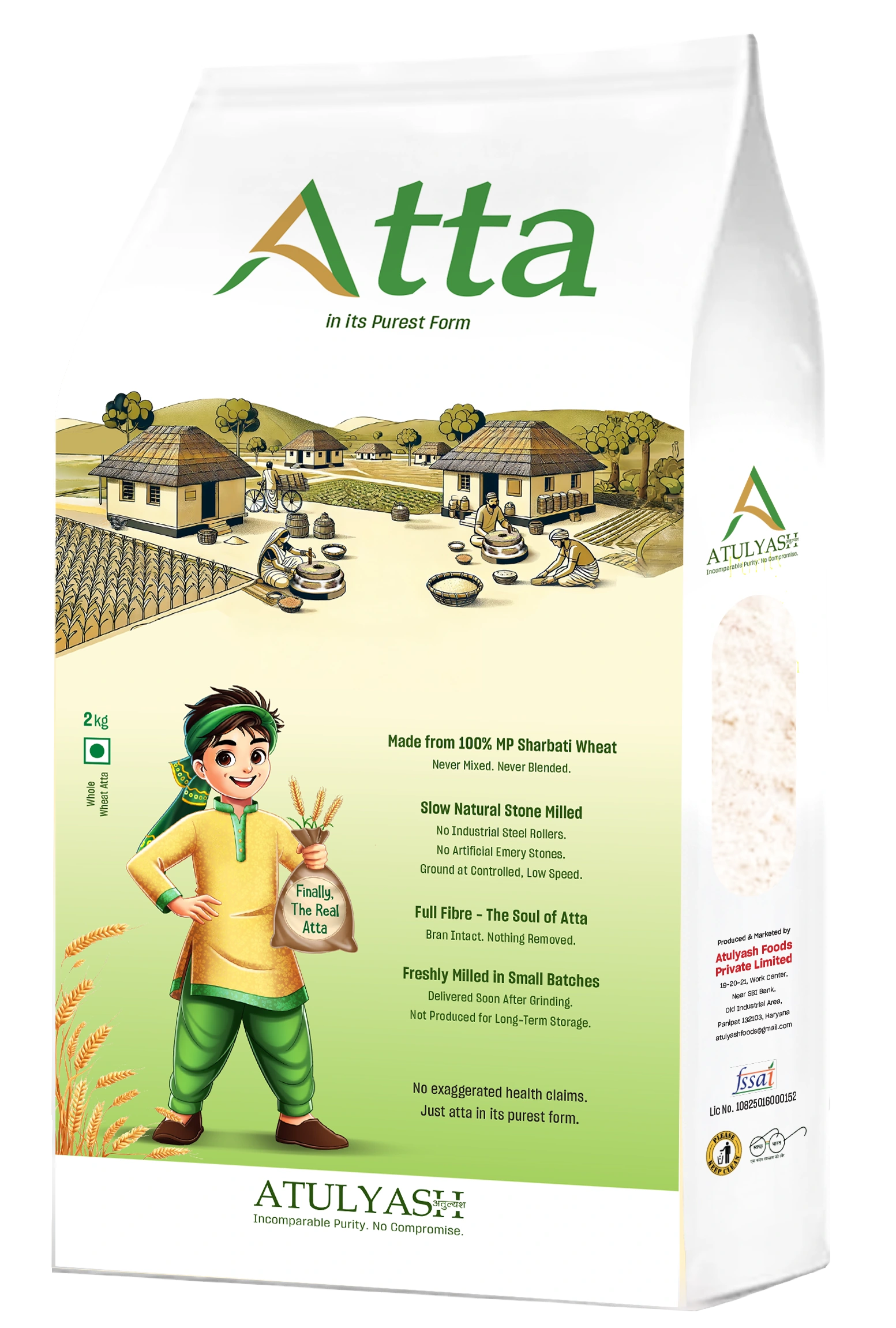
Atulyash brings that seriousness back.
Single-origin MP Sharbati. Natural stone slow milling. Freshly milled for weekly delivery.
The Atulyash app
Your weekly deliveries, in one place.Android and iOS coming soon.
Coming soon onGoogle Play
Coming soon onApp Store
Six decisions.One honest packet.
Veer stands at the centre of the Atulyash Way, surrounded by six commitments: single-origin MP Sharbati, multi-stage cleaning, natural stone chakkis, slow milling, milling in small batches and freshly milled weekly delivery.

Meet Veer — Your Guide to Better Atta
ATULYASH — A different way to think about atta.
From the wheat we choose to the way we mill, pack and deliver — every decision is made differently.
Choose your weekly atta requirement.
Every pack contains the same Atulyash atta: 100% MP Sharbati wheat, carefully cleaned, slow-milled on natural stone and packed with its natural chokar intact.
Atta, in its purest form
Slow-Milled. Pure. Fresh.
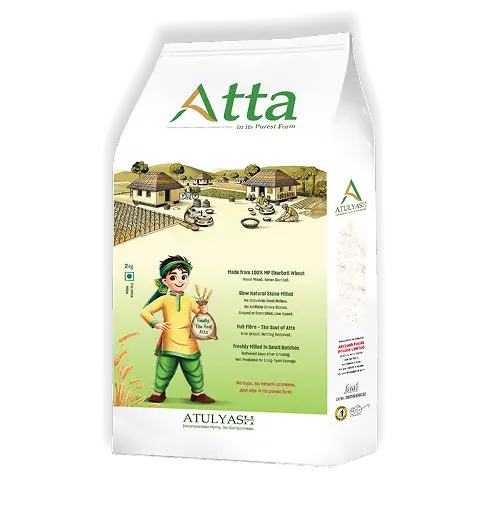
2 kg pack shown
Natural stone milled
Freshly milled
Loading today’s packs and prices…
100% MP Sharbati wheat
Atulyash Whole Wheat Atta
Made from one carefully selected wheat and milled slowly for homes that want to know what goes into their everyday roti.
Fresh-batch routine
No automatic billing
Choose your weekly plan
₹240
Delivery charges, if applicable, are shown clearly in your bag before checkout.
01 Chokar intact
02 Single-origin MP Sharbati
03 Milled in small batches
What is inside?
100% MP Sharbati wheat atta. Nothing added. Natural chokar retained.
Milling & packing
Slow-milled on natural stone chakkis in small batches, then carefully packed to preserve freshness.
Freshness & Delivery
Your delivery date is confirmed before payment. Your atta is freshly milled the previous day and delivered the next morning.
Fresh every week
Choose the rhythm that fits your home.
Every plan delivers the same slow-milled Atulyash atta weekly. Explore the quantities and per-delivery pricing below.
You buy milk fresh. Why store atta for a month or more?
Atta is eaten every day, yet often bought and stored for weeks. Atulyash changes that routine with freshly milled weekly delivery.
- 1Count your household’s daily rotis
- 2Add a practical buffer for other atta dishes
- 3See the weekly plan that best fits your need
- 4Choose your preferred weekly delivery day at checkout
Let us help you estimate your weekly atta requirement
Enter the total number of rotis your family usually consumes each day, and we’ll recommend the right weekly quantity of Atulyash Atta.
How many rotis on a usual day?
Enter your household’s actual daily count
rotis / day
Estimated Weekly Need
1.93
kg
How we calculate
8 rotis/day × 30 g/roti × 7 days + 15% buffer
One medium roti uses about 30 g atta. The buffer allows for parathas, pooris and special meals.
This is an estimate—your household use may vary.
We recommend the smallest available weekly quantity that fully covers your estimate.

Coming soonAtulyash for Android
The Atulyash app
Coming soon.
Keep every weekly delivery close. See what is coming, adjust an eligible delivery when plans change, and track every fresh batch from one clear place.
Coming soon onGoogle Play
Coming soon onApp Store
Android and iOS apps are in development.
Awareness is no longer optional
Food adulteration and quality compromises are real.
You cannot control everything your family eats. You will eat outside. You will depend on ingredients and systems you do not control.
But there is one everyday essential you can choose with far greater clarity now, your atta.
Know the wheat. Know the process. Know what reaches your home.

Veer investigatesEveryday food deserves clear answers.
Veer investigates
Before you buy atta, ask what matters.
Start with the grain. Then the cleaning. Then the milling. Then the freshness. Every step shapes the atta your family eats every day.
The wheat
Is the wheat clearly identified and single-origin, or blended from different sources?
The cleaning
Is the grain thoroughly cleaned before milling?
The mill
Is it milled on natural stone, emery stone, or steel rollers?
The speed
Is it slow-milled, or processed at high speed for greater output?
The chokar
Is the natural chokar retained, or removed from the atta?
The freshness
Is it milled close to delivery, or stored for weeks before reaching you?
The everyday compromises
Everyday atta may carry compromises you cannot see.
The First Compromise: Wheat Selection
It begins with the wheat.
Wheat quality can vary widely. When different lots or varieties are blended, consistency of the final atta can change.
The Atulyash Way
We begin with carefully selected, single-origin MP Sharbati wheat. No blending with other wheat varieties.
The Second Compromise: Milling Stone
Stone-ground does not always mean natural stone
Most mills, including most neighbourhood chakkis, use man-made synthetic emery stones, manufactured by bonding abrasive mineral particles into hard grinding discs. Large-scale systems may use steel rollers.
The Atulyash Way
We use natural stone chakkis, no emery-stone grinding, no industrial steel rollers.
The Third Compromise: Milling Speed
Speed increases output. But it also increases heat.
Speed creates friction. Friction creates heat. And heat can affect the grain’s natural oils, aroma and character.
The Atulyash Way
Atulyash mills slowly to keep the process gentle and controlled.
The Fourth Compromise: Chokar
Whole wheat deserves its natural chokar.
In many milling systems, the wheat grain is separated in stages. Bran/chokar may be removed to make atta appear smoother, improve shelf stability, or be sold separately for other food and commercial uses.
The Atulyash Way
We retain the natural chokar. Nothing removed. Nothing added. Atta in its purest form.
The Fifth Compromise: Discipline After Milling
What happens after milling matters too.
After milling, handling, exposure and packing can all influence the cleanliness and integrity of the final product.
The Atulyash Way
Our post-milling process is structured to minimise unnecessary human contact, with controlled handling and automated packing in a clean environment.
The Sixth Compromise: Shelf Life
Freshness should not be an afterthought.
Once wheat is milled, its natural oils begin interacting with air. Over time, slow oxidation gradually changes the atta’s aroma and character. Yet most atta is made to travel, sit and stay stable for weeks or months.
The Atulyash Way
We mill in smaller batches and deliver weekly, closer to consumption. No unnecessary long storage.
Experience Atulyash
Bring home atta in its purest form.
Freshly milled and delivered weekly, so your atta reaches you closer to when it is meant to be consumed.
₹100 welcome benefit on your first eligible Atulyash order. Applied at checkout as shown in your bag.
Atulyash mobile app
Your deliveries. Your schedule. One app.
Coming soon onGoogle Play
Coming soon onApp Store